MicroNeedling at Home: Is It Safe, and How Do You Use a Derma Roller?

24 August 2026 2 min read

Needles and skincare aren't words people naturally want in the same sentence, so it's fair to want the honest version before you try microneedling at home. Done at the depth and frequency meant for home use, it's a mild, well-tolerated tool. Done carelessly, it isn't.

Here's what microneedling actually does, the safety rules worth taking seriously, and how to use a derma roller properly.

What microneedling actually does

A derma roller creates a pattern of very fine, shallow punctures in the surface of your skin. That controlled, tiny disruption triggers your skin's own repair response, encouraging cell turnover and collagen production over time, and it temporarily opens a channel that helps serums absorb better right after rolling.

At home-safe depths, the effect is genuinely useful but modest and cumulative: smoother texture and better product absorption over weeks, not the dramatic resurfacing a clinical treatment with longer needles can produce.

Is it safe? The rules that actually matter

Needle length is the first thing to get right. For home use, stick to 0.2mm to 0.5mm, short enough to work the surface layer without breaking real ground. Lengths beyond 1mm move into professional territory and should only be done by a trained practitioner.

Hygiene is the second non-negotiable. Soak the roller in 70% isopropyl alcohol for at least ten minutes before and after every use, never share it, and replace it once the needles look bent or dull. Skip it altogether if you have active acne, eczema, a rosacea flare-up, open wounds, or a history of keloid scarring, and check with a dermatologist first if you're unsure. More isn't better: once or twice a week at these lengths is enough, and skin needs the days in between to actually repair.
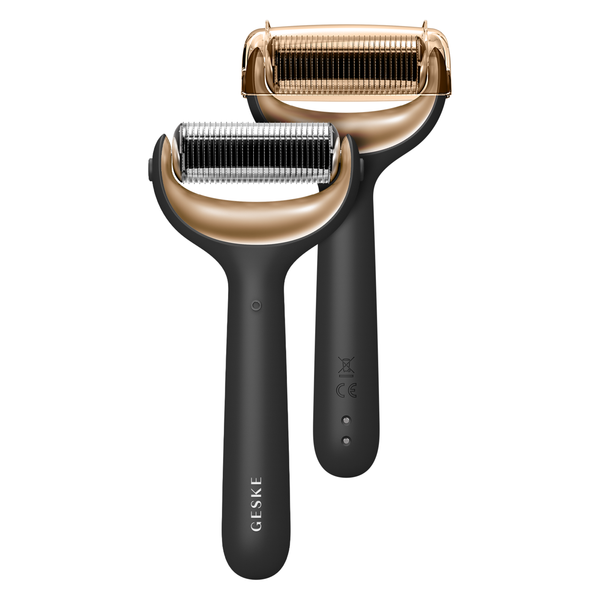
How to use a derma roller, step by step

Start with clean, dry skin and a freshly sanitised roller. Roll gently over each area a few times in one direction, then repeat vertically, horizontally and diagonally, using light pressure, not force, the needles are doing the work, not your hand. Avoid the eye area and lips.

Apply a hydrating serum straight after, since this is when absorption is at its best, and skip retinol, AHAs or BHAs on the same day to avoid overloading freshly treated skin. Moisturiser and SPF the next morning are non-negotiable while skin resets.

The honest verdict

Used at the right depth, sanitised properly, and given time to recover between sessions, at-home microneedling with a derma roller like ours is a safe, worthwhile way to support smoother-looking skin. If you see ongoing redness, irritation or breakouts that don't settle within a couple of days, stop and give your skin a longer break, or speak to a dermatologist.

This article is for general guidance and is not a substitute for professional advice.

Shop the routine

Build the routine

Four devices, one simple sequence.

Where to begin

Find your device

Newsletter

Don't miss the news

Skin guidance, new devices and early access, straight to your inbox.